


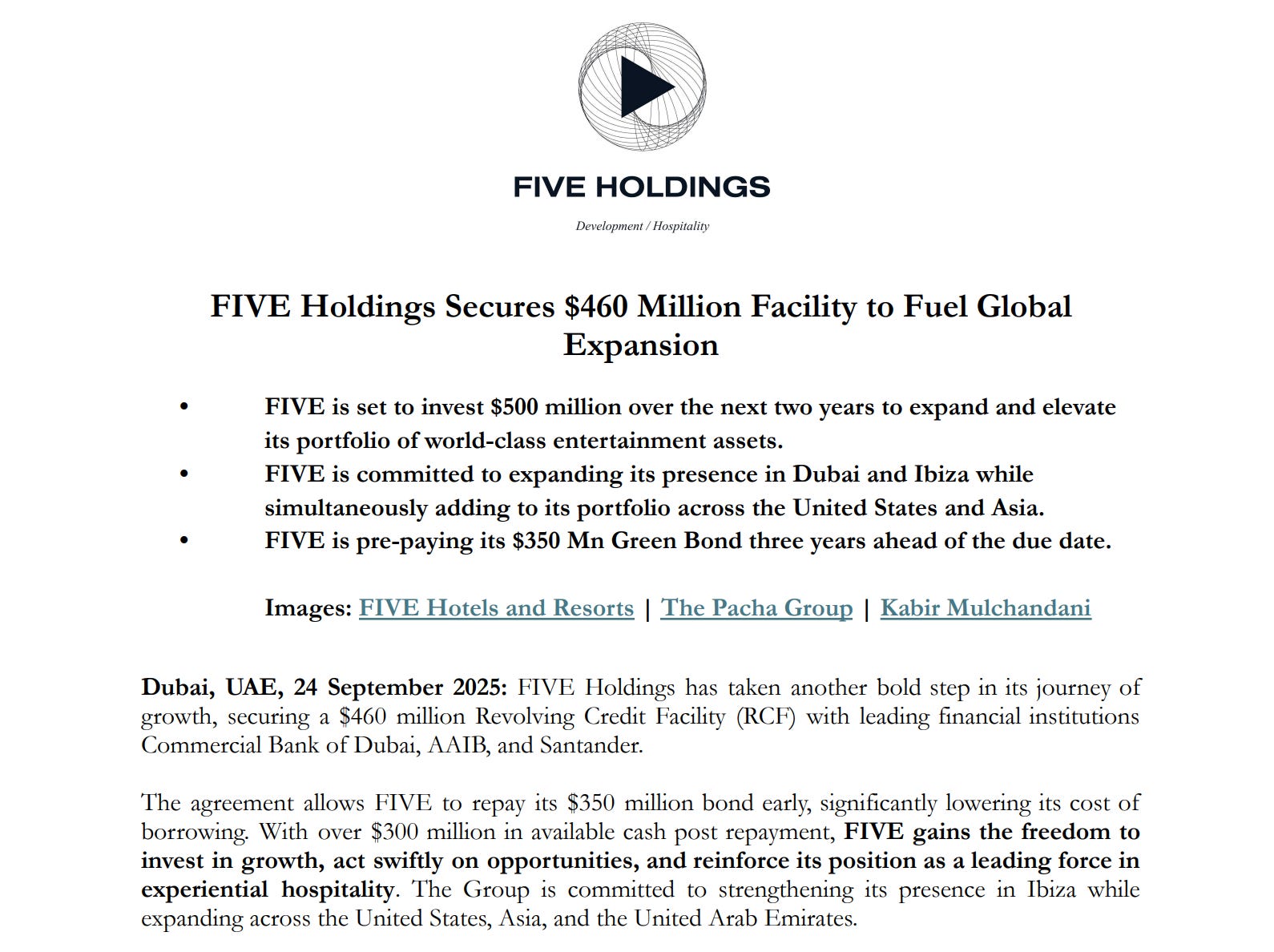
FIVE Holdings generated $589 million in revenue last year, up 28% from the prior year. Their Dubai hotels run at 85% occupancy versus the market’s 78%. Their RevPAR of $310 is almost 2x the Dubai average of approximately $190. They just prepaid a $350 million green bond three years early and secured a $460 million credit facility for expansion into the US and Asia.
The company is contemplating a dual-listing IPO in Dubai and London at a reported $3 billion valuation.
Most people know FIVE as “Dubai’s party hotel.” That label isn’t wrong, but it obscures what’s actually interesting: a vertically integrated platform that monetises entertainment, hospitality, and branded residences simultaneously – generating margins that look more like tech companies than traditional hotel operators.
The question isn’t whether their pool parties are loud (they are; neighbours have complained). It’s whether FIVE represents a new category of real estate company, or just a well-marketed hotel chain with good timing in a hot market.
After reviewing their financials, capital structure, and strategic moves over the past two years, I think the former is closer to the truth – with some important caveats.
Today’s Brief:
The Origin Story: From detention to $2.2 billion net worth
How the Business Actually Works
What Makes It Work (The Entertainment Moat)
Where the Model Struggles
The Next Decade: IPO and the “Experiential Hospitality” Thesis
The Origin Story

FIVE Holdings’ backstory is unusual enough that it’s worth understanding, because the founder’s journey explains some of the company’s more distinctive strategic choices.
Kabir Mulchandani built his first fortune in the 1990s disrupting India’s consumer electronics market. At 22, he dropped out of Stanford to join his mother’s distribution business, secured Akai TV rights, and pioneered aggressive pricing models that made colour TVs accessible to the Indian middle class for the first time. The strategy emphasised customer acquisition over margins – a playbook he’d later apply to hospitality.
He moved to Dubai in the early 2000s and founded Dynasty Zarooni, a property investment firm that got caught in the 2008 financial crisis collapse. In January 2009, Mulchandani was arrested on allegations of real estate fraud. He spent 140 days in detention.
Here’s where it gets interesting: Dubai’s Supreme Court didn’t just dismiss the charges. The court found that the accusers had fabricated the allegations to avoid their own financial obligations. Mulchandani was fully acquitted and exonerated in December 2010.
A year later, he founded SKAI Holdings – the predecessor to FIVE Holdings – with a focus on distressed asset acquisition. The strategy was straightforward: buy undervalued properties in a damaged market, add operational expertise, and wait for recovery.
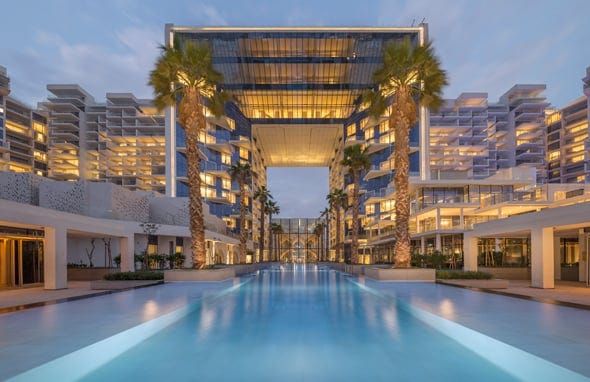
The pivotal moment came in 2016-2017. SKAI developed the Viceroy Palm Jumeirah hotel at a cost of $1 billion. Ten days after opening in April 2017, FIVE took control from the Viceroy management company and rebranded the property. The management dispute resulted in litigation across multiple jurisdictions – Dubai courts, LA Superior Court, DIFC – with FIVE ultimately retaining operational control.
That forced takeover revealed the core thesis: FIVE didn’t just want to develop hotels. They wanted to own the brand, the operations, and the customer relationship. Vertical integration wasn’t an efficiency play. It was the entire strategy.
By 2017, SKAI rebranded as FIVE Holdings, signalling the pivot from pure real estate to integrated hospitality and entertainment. Everything that followed – the record label, the Pacha acquisition, the private jet – flows from that strategic decision.
How the Business Actually Works
FIVE operates three integrated revenue streams that reinforce each other in ways traditional hotel companies can’t replicate.
Hospitality (66% of revenue)
FIVE runs three Dubai hotels: FIVE Palm Jumeirah (477 keys, opened 2017), FIVE Jumeirah Village (247 keys, opened 2019), and FIVE LUXE JBR (222 keys, opened March 2024). They also operate FIVE Zurich (149 keys) and, following their October 2023 Pacha acquisition, Destino FIVE Ibiza (159 keys) and Pacha Hotel Ibiza.
The Dubai hotels generated $177 million in revenue in H1 2025, up 24% year-over-year. Occupancy runs at 85% with a RevPAR of $310 and ADR of $363. For context, Dubai’s market-wide occupancy is 78% and average RevPAR is roughly $190.
FIVE is running at almost 2x the market’s revenue per room. That premium comes from positioning – these are lifestyle hotels targeting affluent millennials and Gen-Z travellers who want experiences, not just beds.
Real Estate Development (34% of revenue, historically volatile)
FIVE develops branded residences alongside their hotels. The FIVE Palm Jumeirah tower includes 221 furnished residences. FIVE Jumeirah Village has 254 residential units. FIVE LUXE JBR includes 222 residences plus the SENSORIA branded luxury line (54 additional units priced from AED 15.5 million / $4.2 million).
Development revenue peaked at AED 732 million in 2023, driven by FIVE LUXE and SENSORIA sales. This segment is inherently volatile – it spikes with major project completions and drops between cycles. S&P Global expects development EBITDA to decline to AED 20-30 million by 2026 as current inventory sells through.
The development model serves two purposes: it provides capital recycling (pre-sales fund construction) and it creates a built-in customer base for hotel amenities. Residence owners use hotel F&B, events, and services. The flywheel works.
Entertainment and Content IP (Embedded across segments)
This is where FIVE differs from traditional hotel operators.
In October 2023, FIVE acquired the Pacha Group for €303 million – funded by their green bond proceeds and a revolving credit facility. The deal included Pacha Ibiza (the legendary nightclub operating since 1973), Destino and El Hotel Pacha, the Toy Room Club franchise across Europe and the Middle East, the WooMoon Storytellers event concept, and global trademark rights to the Pacha brand.
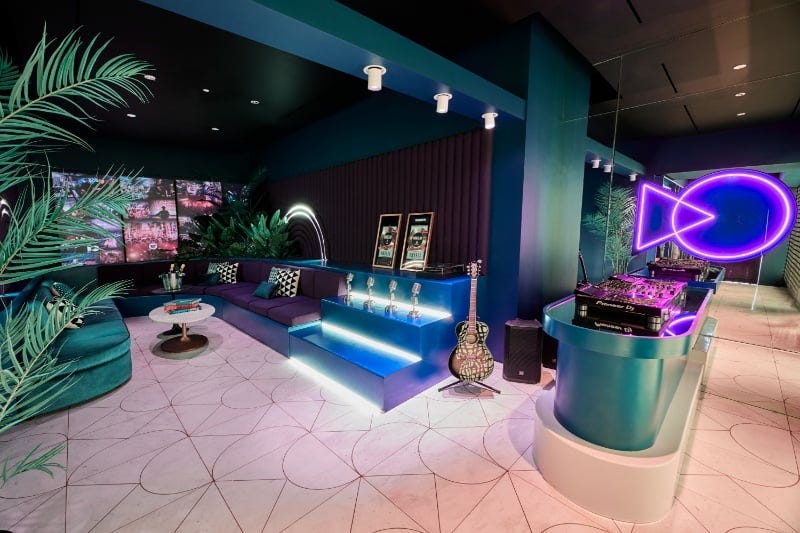
FIVE already operated FIVE Music, a record label launched in 2021 in partnership with Warner Music Group. The label runs a production studio in the FIVE Palm Jumeirah penthouse – marketed as the highest-spec recording facility in the UAE.
The entertainment assets aren’t side businesses. They’re content engines that drive hotel demand. Bohemia Presents (a Saturday day-to-night beach party series at FIVE Palm) and The Penthouse (a rooftop nightclub running since 2018) create experiences that generate social media content, attract international DJs, and justify premium ADR.
The Pacha acquisition exports this model in reverse: FIVE now runs “Pacha ICONS” events at FIVE LUXE in Dubai, importing Ibiza’s DJ lineups and event production to the Gulf. In H1 2025, the Pacha nightclub hosted 64 events with 222,018 guests – up 25% year-over-year.
Lío, the Spanish cabaret and fine-dining concept (retained by Trilantic Capital Partners in the Pacha carve-out), is launching a Dubai location at FIVE LUXE in 2025 through a partnership arrangement.
The integration creates a defensible moat. Competitors can build pool clubs. They can’t replicate 50 years of Pacha brand equity, a Warner Music partnership, or a pipeline of artist residencies that flow between Dubai and Ibiza.
What Makes It Work
Three structural advantages explain FIVE’s outperformance.
Vertical Integration (The Emaar Parallel)
Like Emaar, FIVE owns the full value chain: development, hotel operations, F&B concepts, event production, property management. Each handoff that competitors outsource becomes margin FIVE captures internally.
