

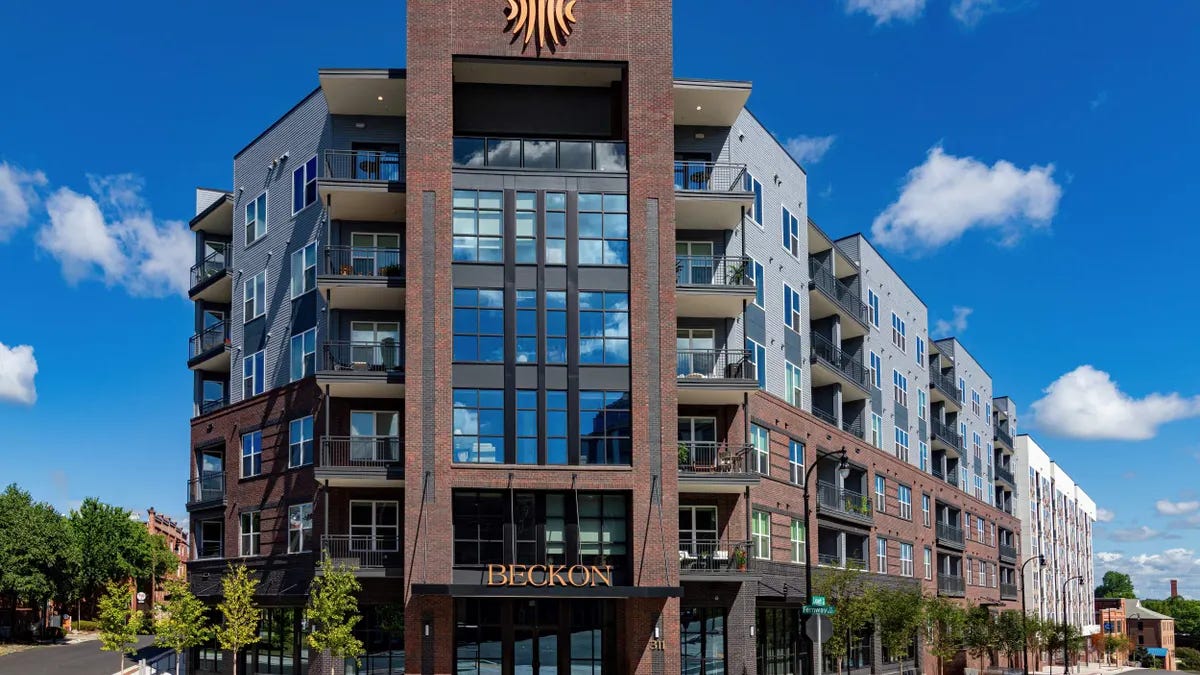
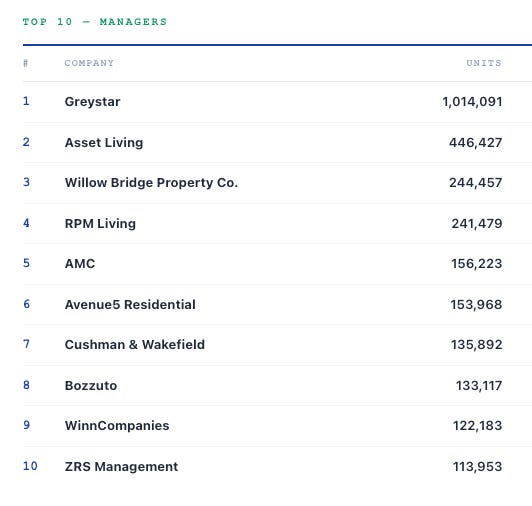
Greystar is the biggest apartment company in America. It is the largest manager and the largest owner. It runs 1,014,091 apartments and owns 119,160 of them.
That means nearly nine out of every ten apartments Greystar runs belong to somebody else.
The gap is growing. In 2025, the number of apartments Greystar owned fell by about 3,400. Over the same year, it took on about 67,000 more to run, up from 946,742 a year earlier. When Bob Faith started the company in 1993, it managed 9,000.

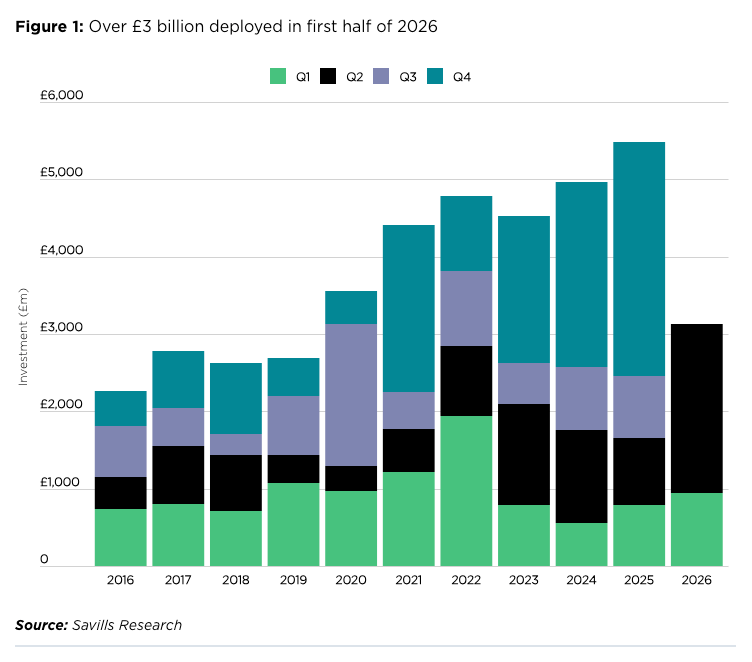
Most people think renting is simple. You pay your rent and a landlord keeps it. Over the past few decades, that has changed a lot. Pension funds, private equity firms and government investment funds now buy rental homes by the thousand. In the first half of 2026 alone, more than $114 billion went into housing-related real estate worldwide. That figure also includes things like student housing.
I’ll use two words a lot in this piece. A landlord owns the home. An operator runs it: it finds the tenants, fixes the boiler, sets the rent and collects it. Sometimes they’re the same company. Increasingly, they’re not.
My argument is simple. For years, much of the money in rental housing came from owning it, helped by cheap borrowing that pushed property values up. That era has ended. Higher interest rates have squeezed what owners keep. Operators keep collecting fees whoever owns the building and whatever it’s worth.
I think the next fortune in rental housing will be made by the companies that run homes. America and Japan have built giant ones. Most of the world hasn’t.
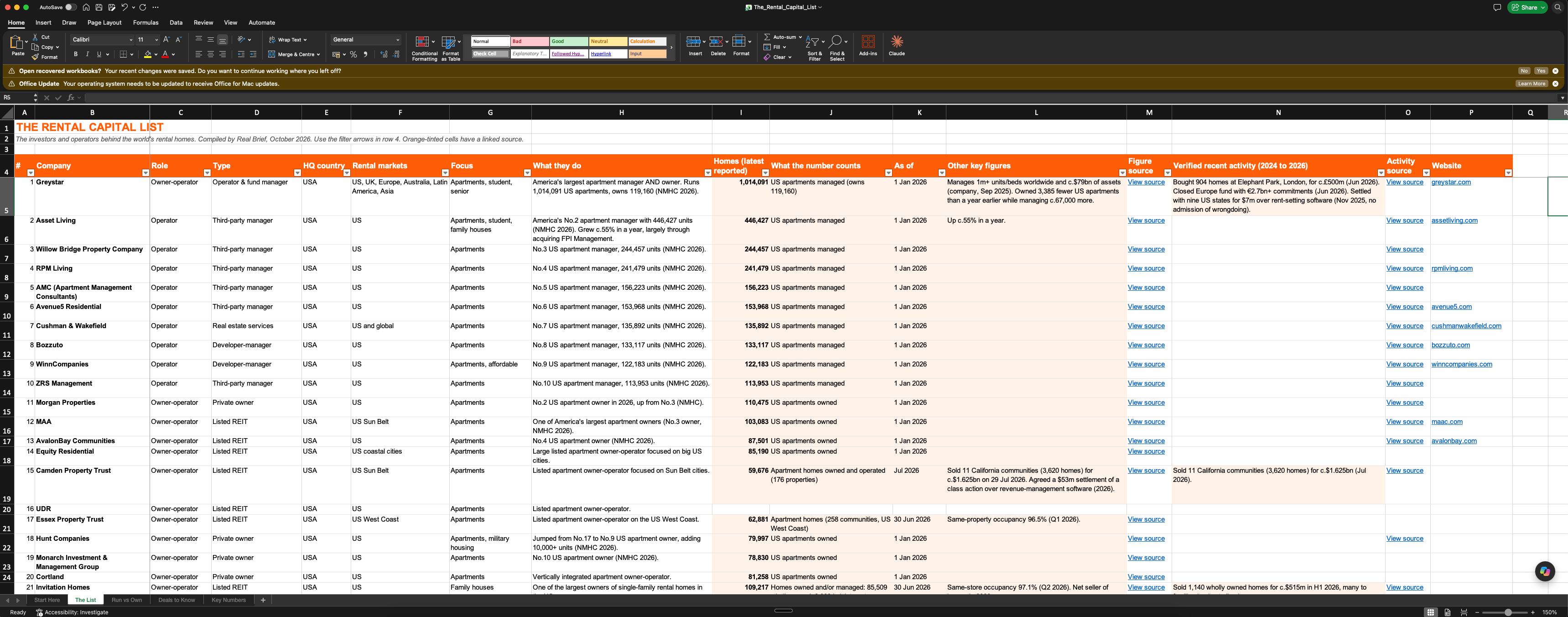
Want to know who these operators are, and who’s funding them? I’ve put 100+ of them in one sortable spreadsheet: who they are, where they invest, and their latest deals.
Today’s Brief:
How renting became big business
The three jobs behind every rental home
Why owning is harder than it looks, and how operators make money
Why lots of money hasn’t meant lots of new homes
Where the gap is around the world
Where I could be wrong
How Renting Became Big Business
America started first
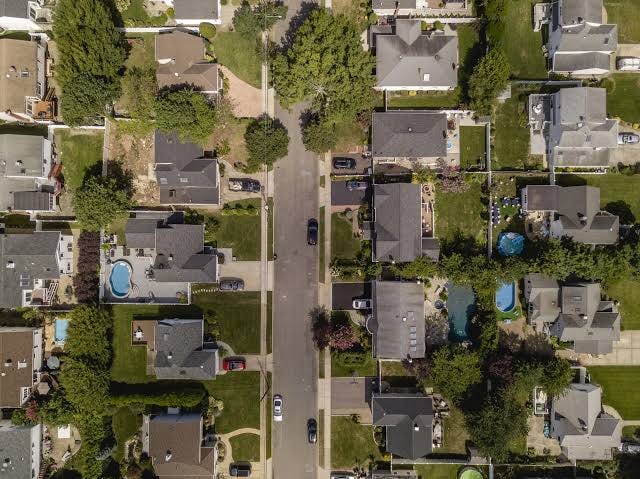
In the US, big investors have owned apartment buildings for decades. After the 2008 housing crash, they started buying ordinary family houses too.
In 2024 Blackstone, the world’s largest property investor, made two big moves. It bought AIR Communities, which had 27,385 apartments, in a deal worth about $10 billion including debt. It also bought Tricon Residential, which ran about 38,000 American family houses, for $3.5 billion.
Blackstone wasn’t only buying buildings in those deals. It was buying companies that already knew how to run thousands of homes, with the teams, systems and know-how that come with them.
Now pension funds are joining in
In December 2025, a group of British local-government pension funds paid £1.1 billion for 5,478 rental homes across 71 sites. They plan to spend another £1 billion to add more than 15,000 homes over ten years.
The interesting detail is what they actually bought. Along with the houses, they bought the company that runs them, and they plan to build their own management platform.
The logic is simple. A pension fund has to keep paying people for decades after they retire, and rent arrives every month for decades. So one family’s rent ends up helping to pay another person’s pension.
Big investors own less than you think
In the US, big investors own only about 3% of single-family rental homes nationally. In a few cities the share is much higher, around 25% in Atlanta.
Apartments tell the same story. America’s 50 biggest apartment owners hold about 11% of all apartments, while the 50 biggest managers run about 24%. Running homes is concentrated in far fewer hands than owning them.
The Three Jobs Behind Every Rental Home
Every rental home needs three things:
Someone to build it. That’s the developer.
Someone to pay for it and own it. That’s the landlord.
Someone to run it day to day. That’s the operator.
These used to be the same company. Increasingly, they aren’t.
Elephant Park in London is a good example. In 2015, Canada’s national pension investor and the developer Lendlease teamed up to build rental homes there. They finished four buildings with 904 homes and filled them with tenants. Then in June 2026, Greystar’s European fund bought the lot for about £500 million. One group took the risk of building, and another bought the steady income once the homes were full.
Tokyo is an even clearer case. This September, KKR and Weave Living sold their 14-building apartment portfolio to a Southeast Asian investor, and Weave carried on running the homes. The owner changed, but the operator didn’t.
Even Germany’s biggest landlord, Vonovia, runs 75,148 homes it doesn’t own. America’s second-biggest apartment manager, Asset Living, runs about 446,000 homes and doesn’t own the buildings.
What to learn: an operator earns fees no matter who owns the building. It doesn’t need billions of its own money to grow. Every home it runs teaches it something about tenants, pricing and costs. That’s how Greystar reached a million homes without buying a million homes.
Why Owning Homes Is Harder Than It Looks
Take a made-up example to see the maths.
Imagine a building with 200 flats, each renting for $2,000 a month, with 95% of them occupied. That brings in about $4.56 million a year.
Staff, repairs, insurance and everything else take about a third of that. That leaves roughly $2.96 million in profit. An investor happy with a 5% yearly return would pay about $59 million for the building.
Now say the investor borrows 60% of the price at 6% interest. The interest alone costs about $2.1 million a year. What’s left for the investor works out to a return of around 3.5% on their own money.
That is a thin return for all the work and risk involved.
High rents don’t automatically mean a good investment. What you pay for the building, what your loan costs and how well the homes are run matter just as much as the rent.
How Operators Make Money
An operator’s fee on any single building is small. Large apartment buildings typically pay a manager a few percent of the rent, sometimes as little as 3%. On our 200-flat building, 3% would be about $137,000 a year.
That doesn’t sound like a fortune. But look at what it takes to earn it. The operator doesn’t buy the building or take on the loan, and it doesn’t lose money if the building’s value falls. Multiply that small, steady fee across a million homes and you have a very different business.
Japan proves it
Daito Trust is best known for building apartments. But this year it expects its rental business to make ¥88 billion of operating profit. That’s nearly twice the ¥47 billion it expects from construction. New building orders fell last year, but the number of homes it runs kept rising. For the company that builds the homes, the bigger money is in running them.
Meanwhile, landlords are being squeezed
Vonovia owns 528,370 apartments worth €85.7 billion, and its homes are doing fine. Only 2.3% are empty, and rents rose 3.5% in the past year. Yet its shares have recently traded at roughly half the value of the property it owns. Investors are worried about its debt, which equals 46% of that value.
What to learn: a full building with expensive debt can be a worse business than an operator with no debt at all. The rent is the same either way. What differs is who carries the risk.
Want to know who these operators are, and who’s funding them? I’ve put 100+ of them in one sortable spreadsheet: who they are, where they invest, and their latest deals. Free for subscribers.
Lots of Money, Not Many New Homes
This was the part of the research that surprised me most.
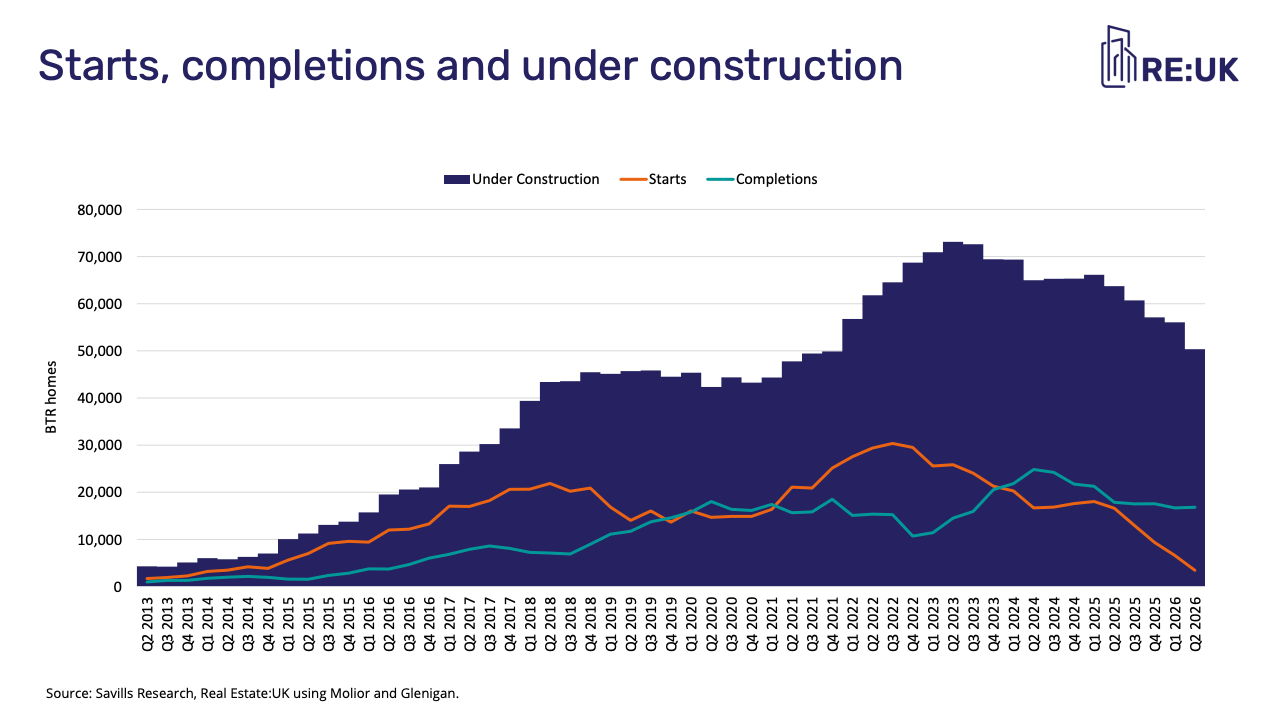
In the first nine months of 2026, investors put about £4.2 billion into UK build-to-rent, more than in any previous year at this point. Yet in the year to June, construction began on only 3,455 new build-to-rent homes, down 79%.
How can both be true? Only 36% of that money went into building something new. Building costs are up 36% since 2020 and loans cost more, so buying a finished building is often easier than building one.
Governments are starting to notice. From 7 January 2027, a new US law will stop investors that control 350 or more family homes from buying more existing ones, with an exception for homes built specifically to rent. I expect more countries to follow the same idea: welcome investors who build new homes, and make life harder for those who only buy existing ones.
Where the Gap Is Around the World
Japan already has a company bigger than Greystar
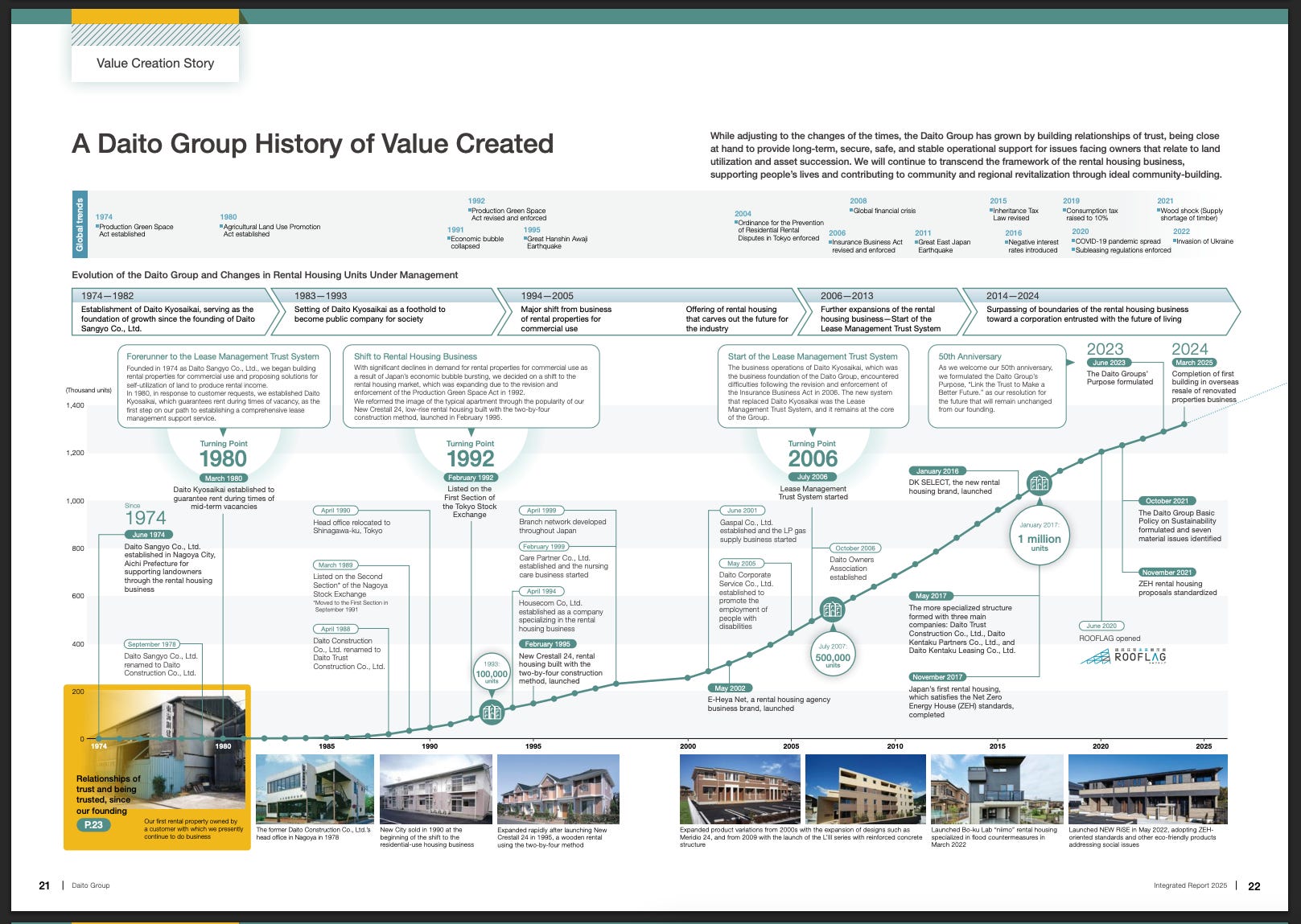
Most people outside Japan have never heard of Daito Trust. In 1974, it started out building warehouses on farmers’ land. Today it runs about 1.3 million rental homes, more than Greystar runs in America.
The clever part is that Daito doesn’t own most of them, and that’s where it makes most of its money. A landowner keeps the land. Daito designs and builds the apartments, then rents the whole building from the owner for up to 30 years and guarantees them an income. It then rents the flats out and runs them. In 2021, the homes it ran belonged to about 88,000 different landowners.
Now Daito wants to be the world’s biggest manager of rental homes, with 1.5 million by 2029. This July it started buying homes in Texas.
Greystar is taking the American model abroad
In June, Greystar closed its second European housing fund with more than €2.7 billion of commitments, targeting eight countries including the UK, Spain and Germany. The investors included sovereign wealth funds and pension funds. In Australia, where large-scale renting is still new, it has put together four rental projects worth about A$1.56 billion.
It isn’t only Greystar. In the first half of 2026, 60% of the money invested in UK build-to-rent came from North America.
Britain: big money, young industry
Britain has 156,688 finished build-to-rent homes, and build-to-rent makes up only about 8% of new homes. The industry is real, but it’s still young, and much of the money behind it is American.
The Gulf: plenty of homes, very few operators
In Dubai, most homes are sold off-plan to individual buyers, so one tower can have hundreds of different owners.
Professional renting clearly works there. Dubai Residential REIT runs 35,976 homes that are 98.6% occupied, and 94.1% of its tenants renew. Its borrowing is just 6.8% of the portfolio’s value, against Vonovia’s 46%. But it’s one company, not an industry. Saudi Arabia is testing the idea in new areas, including a proposed 4,000-bed staff housing project in Riyadh that hasn’t been finalised yet.
What to learn
Most conversations I have about build-to-rent, whether in London or Dubai, start with “who is going to build it?” I think the better question is “who is going to run it?”
For developers: you don’t have to choose between selling homes one by one and keeping a building forever. You can build for rent and sell the whole finished building, as happened at Elephant Park. Or you can do what Daito does: build on someone else’s land, then run it for them.
For investors: judge the operator as carefully as the building. Over ten years, the operator will make or lose you more money than the marble in the lobby.
For operators: in most countries, the biggest gap is running homes, not building them. Whoever solves it locally will be hard to catch, and if no local company does, an American or Japanese one probably will.
Where I Could Be Wrong
1. Fees are thin, and contracts can be lost. An operator doesn’t own the building, so an owner can replace it. A bad year of service can cost a contract.
2. The biggest winners do both. Greystar is America’s biggest owner as well as its biggest manager, and Daito builds as well as runs. The pure operators are consolidating fast. Asset Living grew 55% in a year, mostly by buying another manager. So the edge goes to whoever controls the running, even if they own some buildings too.
3. Size attracts regulators. In 2025, Greystar paid $7 million to settle with nine US states over rent-setting software that used competitors’ data. It admitted no wrongdoing. The more homes an operator runs, the more its pricing becomes a political question.
4. Cheap money could return. If interest rates fall a long way, owning with borrowed money could become very profitable again.
So here is the precise version of my claim. Over the next decade, more of the reliable money in rental housing will go to whoever runs homes well at scale than to whoever simply owns them with borrowed money.
The Bottom Line
Renting has become one of the biggest businesses in the world. For years, the money was in owning homes. Today, owners are fighting high debt costs, while the companies that run homes keep collecting.
America and Japan show how big operators can get. Britain shows what happens when money arrives before the operators do: lots of buying, not much building. Most other markets show the gap.
The biggest rental companies in America and Japan have something in common. Most of the homes they run belong to someone else, and the running is what makes them money. The next one in London, Sydney, Dubai or Riyadh probably won’t be the biggest landlord. It will be the company that learns to run homes for everyone else.
Thanks for reading,
Zakee